The thin steel doors on the newer two-car garages dent easily, and the old wood doors in the historic neighborhoods rot from the bottom up. OnPoint Pro Doors replaces single sections across Topeka where the original design is still built, and says so plainly when it is not. The estimate is free.
Tell us what the door is doing. The estimate is free; the work waits for your yes.
Many of the doors on the newer builds out west are single-layer steel with no insulation behind it. They are light and they run well, but the skin dents under a bumper, a ball or a bike handlebar, and hail leaves a pattern of small dimples on the side that faces the storm.
Most dents are only cosmetic. The ones worth fixing sit on a hinge line or bend the edge where two sections meet. A section creased there no longer folds cleanly as the door rolls through the curve at the top, so the door hitches, a roller gets shoved sideways, and sooner or later one rides out of its track.
A split skin is another matter. Once the steel tears, wind-blown grit and moisture get behind it and the damage spreads from there.
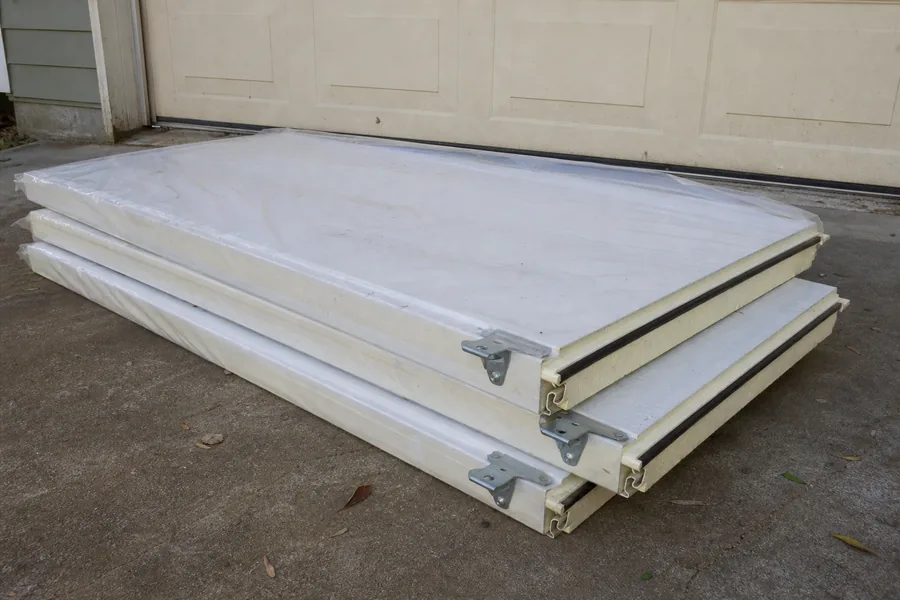
A single section can only go in if the maker still builds it in the same width, height, thickness, panel pattern and finish. Anything else sits out of line against its neighbors and looks like a patch from the street.
So the first job is reading the door. Most carry a label on the inside, often on the top section or an end stile, with the maker and the design details. That is looked up before anything is promised, and you hear the answer either way.
When the design is still made, one section comes out and the rest of the door stays. When it is not, a straightened or reinforced section can sometimes carry on for a while, and a new door is written up alongside so you can weigh the two.
Potwin and Westboro still have heavy wood carriage-house doors on their detached garages, some of them older than anyone living in the house. Wood fails from the bottom: snow melt and rain sit against the lowest rail, the finish lets go, and the rail softens until screws and hinges no longer hold.
A wood section can sometimes be rebuilt where the damage is confined to the bottom rail or a single board. Where a whole section is gone and the door is one of a kind, a matching section may not exist, and a lighter carriage-look steel or composite door is the practical alternative.
Either way, the springs on those doors are checked at the same visit, since old wood doors often carry mismatched springs from earlier repairs.
A new section arrives in the factory finish. The door it joins has spent years facing the sun, and on a west-facing garage the paint has usually shifted a shade or two. On white and almond the difference tends to be small; on darker colors it can stand out.
You see the sample against your door before anything is ordered. If the match is not close enough, painting the whole door afterward brings the sections back together, and that choice is yours to make with the difference in front of you.
Texture matters as much as color. A wood-grain skin next to a smooth one is obvious from the driveway, and so is a short-panel design beside a long-panel one, which is why the label and the sample come before the order and not after.
Wide doors rely on struts, the steel braces across the inside of the sections, to stay flat when the wind leans on them. A replaced section gets its strut transferred or a new one installed in the same spot, so the door does not bow where the patch went in.
The new section also changes the door's weight. Springs are set for the door as it stood when they went on, so after the swap the door is lifted by hand, released at a few heights and rebalanced until it stays put. Both cables are checked for even lift, and the opener's force and travel are reset.
Leaving the balance alone is how a tidy panel swap turns into a laboring opener by the next summer.
Two visits in most cases: one to identify and measure, one to install once the section arrives.
Two or three dented rows, a design that is no longer made, a wood door rotted through several sections, or a door that also needs springs, cables and rollers all point toward replacement. In those cases both options are written side by side, with the reasons, and the decision stays with you.
A new insulated door also changes how the garage feels in July and how much dust the wind pushes under it, which is worth weighing when the old door is already tired.
Yes, when the maker still builds that section in the same size, thickness, pattern and finish. The door's label tells us, and you hear the answer before anything is ordered.
The pattern and shape will. The color depends on how far the old paint has faded. You see a sample against the door first, and painting the whole door is an option if the difference shows.
Usually not. Small dents in the middle of a panel are cosmetic. Sections creased along a hinge line, or ones that make the door catch as it rolls, are the ones worth replacing.
Often, if the damage is limited to the bottom rail or a few boards. If whole sections have rotted, a lighter carriage-look door is written up beside the repair.
Then a matching section cannot be ordered, and you are told that first. Minor damage can sometimes be straightened or braced; otherwise a new door is the honest answer.
Because the new section does not weigh the same as the old one. Springs set for the old weight leave the door heavy or light, and that strain ends up on the opener.
Yes. The section is identified, the options explained, and the free estimate comes before any part is ordered or any work begins.
Tell us the fault and you'll get a straight answer on whether it can wait. Free estimate anywhere in Shawnee County.
Quicker to talk? Call (785) 498-8618.
Tell us what the door is doing. The estimate is free; the work waits for your yes.