
Wind carries grit into every garage here, and grit is what wears out rollers, pulleys and, in the end, cables. Most cable failures give a warning first: a squeal, a shudder, a door that sits unevenly. If a cable has gone slack, shows broken strands or has left its drum, park the door and call us. The estimate is free.
Tell us what the door is doing. The estimate is free; the work waits for your yes.
The wind here never quite stops, and it blows fine dust under the door and into the tracks, the rollers and the pulleys. Grit mixed with old grease turns into a paste that grinds bearings down. Rollers start to drag, pulleys stop spinning freely, and every part that should roll starts to rub instead. The cables take the extra load and wear faster. If the trouble is a dented or split section rather than the hardware, our garage door panel replacement page covers what can be swapped on its own.
Clearing the tracks, replacing worn rollers and pulleys with sealed ones, and using a dry lubricant that doesn't hold dust keeps the whole system rolling. It's the heart of a tune-up visit, and the reason cables last longer after one. On a door that faces the prevailing wind, the bottom seal matters too, because it's the gap most of the dust comes through.
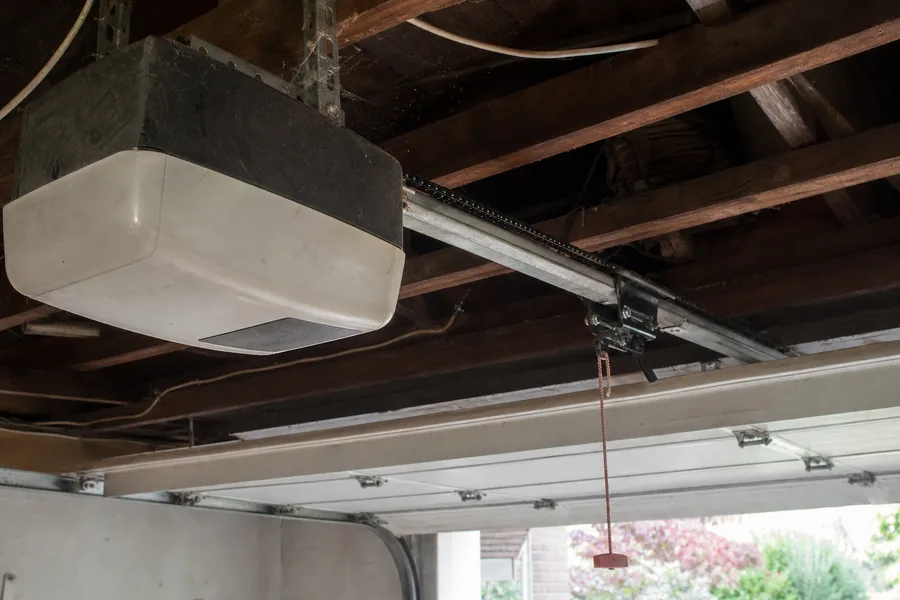
In the older neighborhoods, some garages still have heavy wood carriage-house doors, and on many of them the springs have been swapped over the years for whatever was on hand. Mismatched springs lift the two sides unevenly, and the cable on the heavier side frays first, usually right where it loops at the bottom corner.
Fixing the cable alone on those doors only lasts until the next fray. The springs are matched to the door's actual weight on the same visit, so both cables share the load again.

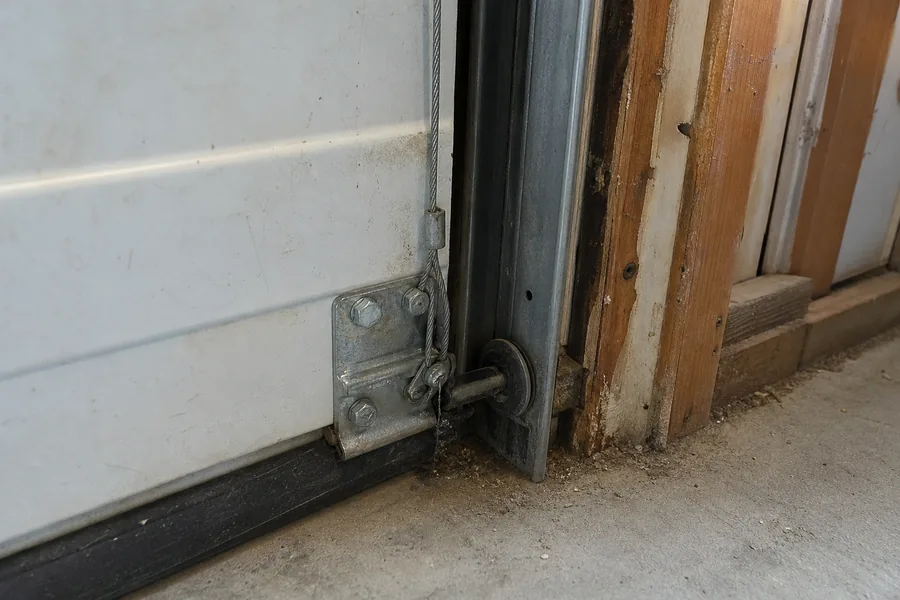
Before a cable parts, it usually tells you. A squeal or a scraping sound near the top of the door, a door that shudders on the way up, a bottom edge that no longer meets the floor evenly, strands sticking out near the bottom corner. Any one of those is worth a visit before the door is used much more.
Catching a cable while it's fraying means a scheduled repair instead of a door hanging crooked on a morning when the car needs to get out.
Tension is dealt with before anything else.
A garage facing west on a July afternoon gets hot enough to dry out the grease in rollers and pulleys. Dry bearings wear quickly, and a roller that has dried out often squeals before it seizes. Heat also stiffens old weatherstripping, which lets more dust in under the door.
New sealed rollers and a fresh bottom seal take care of both, and they're listed as separate lines so you can choose.
Doors with springs stretched along the ceiling lift through pulleys; doors with a spring on a shaft above the opening wind their cables onto drums. Both kinds are common here, sometimes on the same street. Pulleys wear at the bearing and saw at the cable when they stop turning; drums crack or wear a groove that lets the cable slip.
The technician identifies the system at the door and carries the parts for both, so the repair is finished the same visit rather than waiting on a part.
Older homes in Potwin, Westboro and College Hill, the ranches in Oakland, Highland Park and Sherwood, and out to Lawrence, Silver Lake, Auburn, Rossville, Carbondale and Tecumseh.
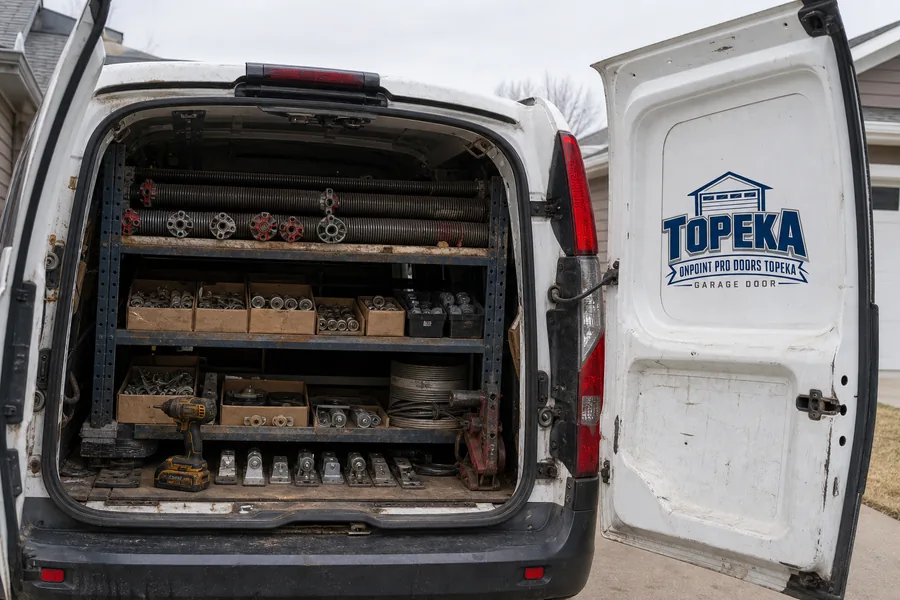
Cables, pulleys and rollers for the common doors are on the truck.
A pair every time. Both cables share the load, so both are replaced.
Pulleys and drums inspected. Worn ones go with the cables.
Springs matched to the door. Uneven springs wear out cables.
Grit cleared. Tracks cleaned before the door is run again.
A safety cable in each extension spring. Added wherever one is missing.
Often a dry pulley or roller. Left alone, it wears the cable; new sealed parts or a tune-up usually settle it.
It's fraying and should be replaced soon, along with the cable on the other side.
Usually mismatched springs or a stretched cable on one side. Both are corrected on the same visit.
On a door that has never had one, yes: tracks cleaned, rollers and pulleys checked, cables inspected, balance set.
One side is carrying more: mismatched springs, a roller dragging on that side, or grit packed into that track. The cause is corrected along with the cables.
Most cable calls finish on the first visit; the common parts ride along.
Yes. Sectional shop and warehouse doors get the same care, with heavier hardware where it's needed.
The call gets you a two-hour window, and the technician rings before arriving.
Yes. Every part is listed, in writing, before anything is done.
Describe the noise or the problem when you call; you get a two-hour window and a heads-up before the technician arrives.
Free estimate in the city and the towns around it.
Tell us the fault and you'll get a straight answer on whether it can wait. Free estimate anywhere in Shawnee County.
Quicker to talk? Call (785) 498-8618.
Tell us what the door is doing. The estimate is free; the work waits for your yes.