
Summer is hard on openers here. A closed garage in July bakes the circuit board and the backup battery, and the wind packs grit into the rail. Most calls are a part or a setting; some are a door the opener can't move anymore. When a new opener is the better answer, it goes in on a single visit. The estimate is free.
Tell us what the door is doing. The estimate is free; the work waits for your yes.
An attached garage facing west gets very hot on a still afternoon, and the opener's electronics sit near the ceiling where the heat collects. Logic boards fail more often after a hot spell, the battery in a battery-backup unit loses capacity fast, and plastic gears grow brittle over years of heating and cooling. The pattern is an opener that's fine at breakfast and sulky by late afternoon, or one that goes dark after a summer storm. When you'd rather check on the door from your phone, our smart garage door openers page explains the options.
Replacement boards and backup batteries for the common units are carried. Plugging the opener into a surge protector before storm season, and changing the backup battery every few summers, keeps most openers out of trouble.
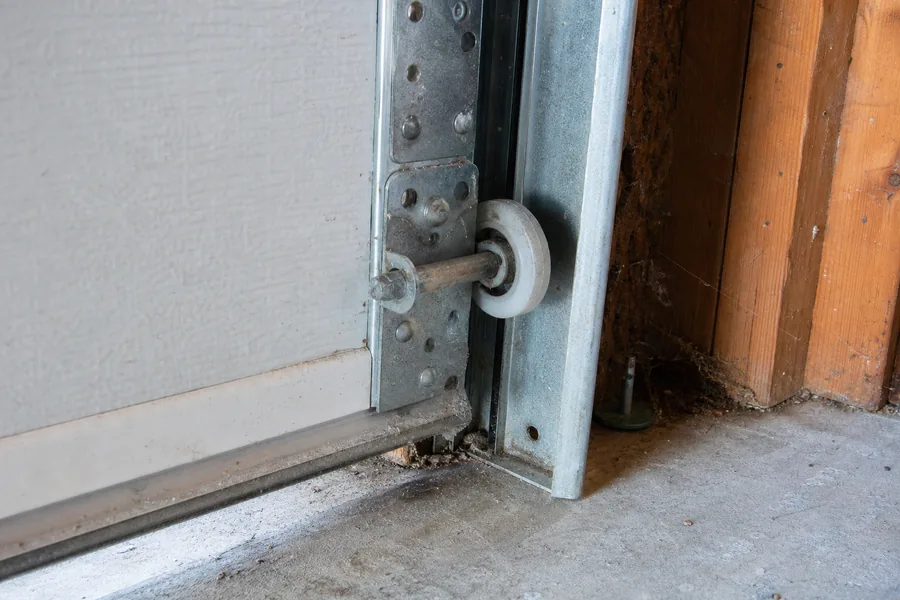
Wind carries fine grit under the door and it settles everywhere: on the photo eyes near the floor, in the track, and along the opener's rail where the trolley rides. Dusty lenses make the door refuse to close in low light. Grit in the rail makes the trolley bind and the opener labor. Neither is a failing opener; both are a short visit with the right cleaning and alignment.
If an eye keeps drifting out of line, its bracket is usually bent, and the bracket is replaced rather than nudged back again and again.
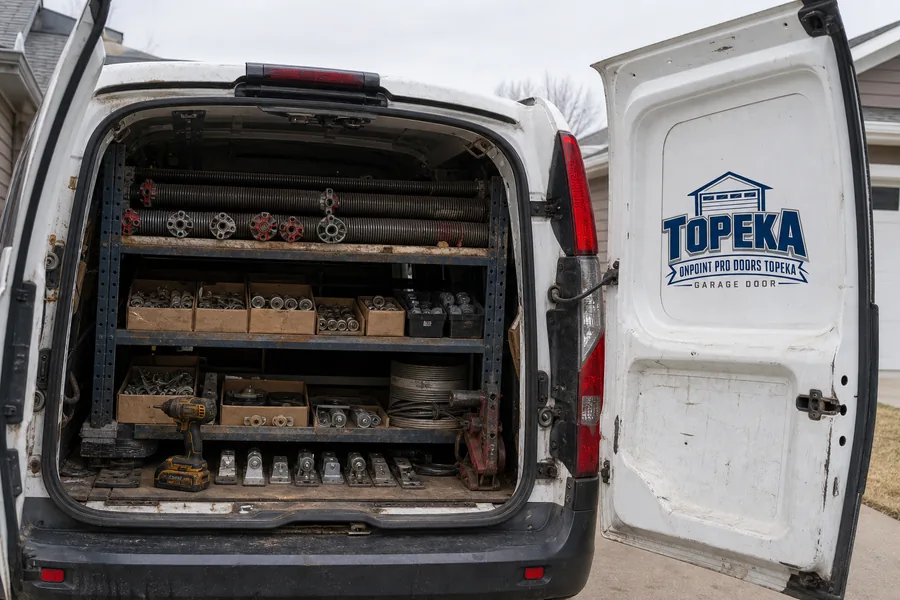

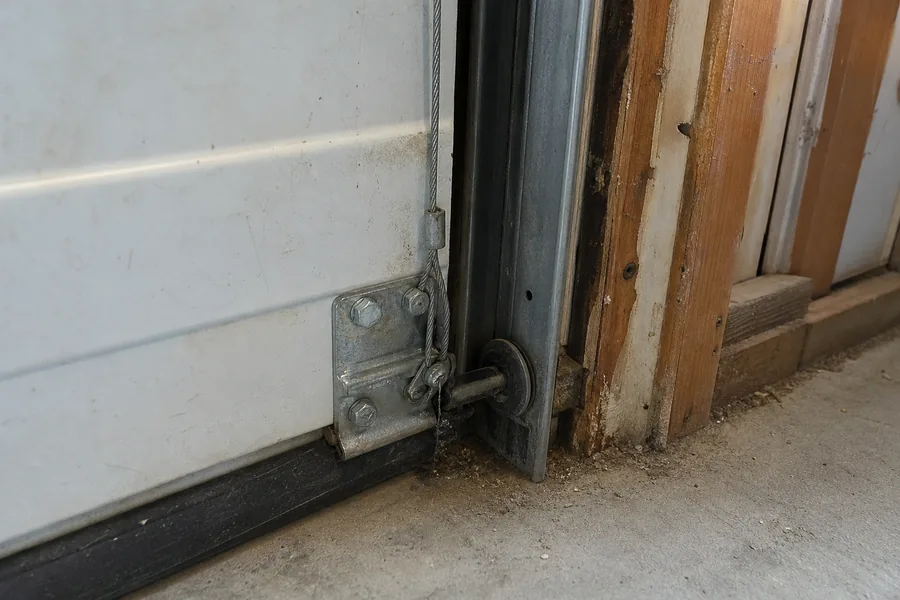
The most common reason we install instead of repair is a failed board on a unit old enough that parts are hard to find, or an opener that was never strong enough for a heavy door. Installation starts with the door, not the opener: springs balanced, rollers free, track aligned. A new opener on a door that binds wears out as fast as the old one did.
Then we take the old unit down and haul it off, hang the new one on a rail or on the wall beside the door, mount and align the eyes, set travel and force to the door, and pair each remote, the keypad and your car's built-in buttons. You watch it run and reverse before we go.
We start with the door, because a bad door makes a good opener look broken.
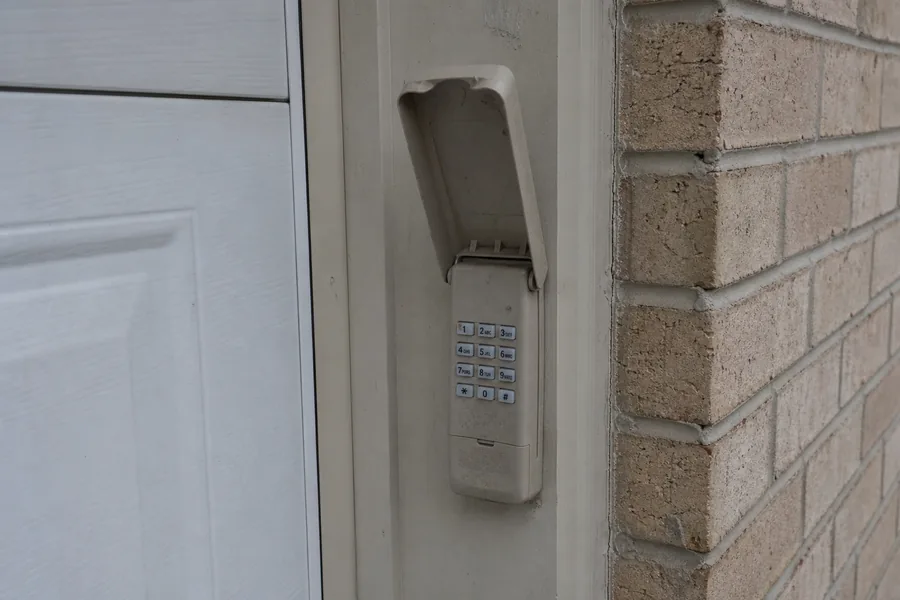
A remote that only works when you're almost at the door usually has a weak battery, or the opener's receiver is being drowned out by an LED bulb in its own light socket. Switching to a garage-rated bulb often fixes range on the spot. Keypads that stop answering after a cold snap or a hot week often need a battery or have corroded contacts.
After you move in, clearing the opener's memory and pairing only your remotes and your code is worth doing, because every remote the last owner handed out keeps working until then.
For a detached garage or a shop, a chain drive is tough and simple. Under a bedroom or beside a living room, a belt drive runs far quieter. Where the ceiling is crowded with storage or the door is tall, a wall-mounted unit beside the door keeps the space clear, as long as the door runs on torsion springs.
Whichever fits, it comes with rolling-code remotes, and battery backup is worth having for the outages summer storms bring. You'll hear which type suits your garage and your door before anything is ordered.
From Potwin and Westboro to Oakland, Highland Park, College Hill and Sherwood, and out to Lawrence, Silver Lake, Auburn, Rossville, Carbondale and Tecumseh. Parts and new openers ride on the truck.
Tell us your street and you get a two-hour slot.
A heavy door ruins new openers. Balance comes before any install.
Heat shortens backup batteries. Replacing one is a quick job.
Garage-rated bulbs matter. Some LED bulbs block the remote signal.
Old units get an honest answer. Repair when it makes sense, replace when it doesn't.
Often, yes. Common belt and chain units come on the truck, and the door is balanced first so the new opener lasts.
Heat is hard on the circuit board and the backup battery. Both are checked, and a failing board or tired battery is replaced on the visit.
Dust on the safety eye lenses, or an eye slightly out of line, loses the beam in low light. Cleaning and realigning usually settles it.
If the ceiling is crowded or low, it can be a good choice. It needs torsion springs and a balanced door, which the technician checks first.
Yes. It comes down and leaves with us when a new one goes in.
Almost always, once the door is balanced and running freely. If the door needs springs or rollers first, that's on the estimate as its own line.
Yes, for repair or installation, and it's written before any work.
A short call or the form is enough: what the door is doing and where it is. You're given a two-hour slot, and the technician phones on leaving the job before yours.
Free estimate across the county and the small towns nearby.
Tell us the fault and you'll get a straight answer on whether it can wait. Free estimate anywhere in Shawnee County.
Quicker to talk? Call (785) 498-8618.
Tell us what the door is doing. The estimate is free; the work waits for your yes.