From the historic streets near downtown to the newer houses on the edges, and out to the towns around the county: here is our ground.
Tell us what the door is doing. The estimate is free and you can say no.
Repairs, tune-ups and full replacements.
Emergency service calls after hours.
Doors off their rails, cables, rollers.
New doors measured and installed.
Opener repair and replacement.
Springs and openers and cables, same day as a rule.
A tech passes through here weekly.
Slots today where the schedule allows.
Repairs and new doors, slots most weeks.
Potwin and Westboro are historic neighborhoods where detached garages and carriage-house doors suit the houses. College Hill, by the university, and Oakland have older homes with a mix of alley and driveway garages. Highland Park is built up with postwar ranches whose garages are attached, and Sherwood has larger lots and bigger doors.
Around the county, the route takes in Tecumseh to the east, Silver Lake and Rossville to the west, and Auburn and Carbondale to the south, with Lawrence farther east.
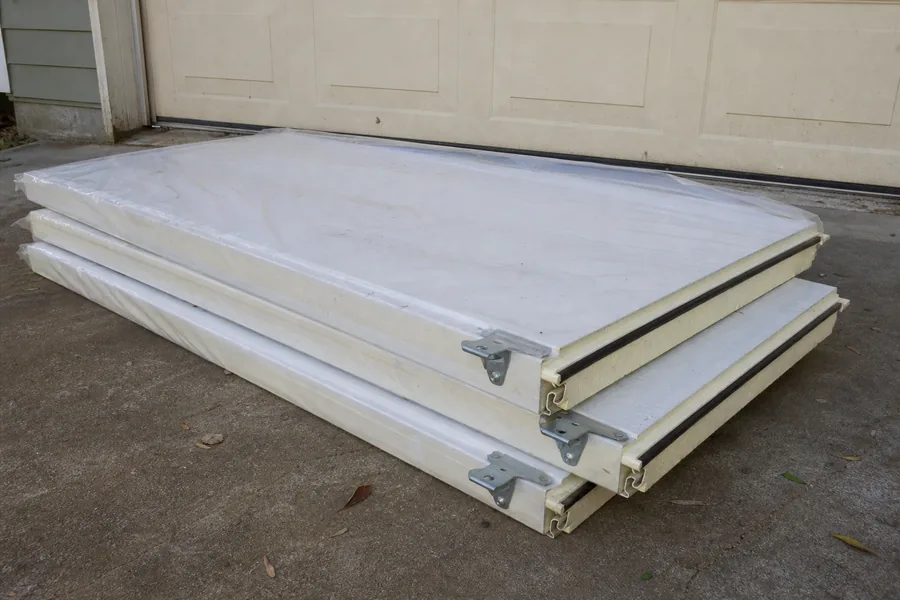
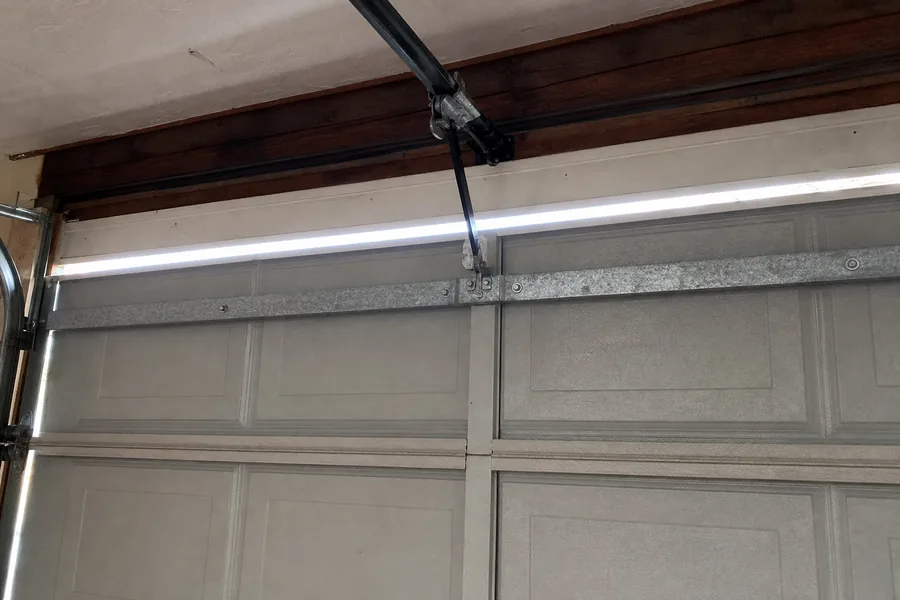
Our most frequent stops fill the grid above, and the map marks the outer edges.
We serve this area · If you can see your town on this map, we come to you. Topeka and about 100 miles around it, not just the city limits.
Wind and grit come off the open ground to the west and south, and the newer houses on the edges take the brunt of it. Summer heat bakes their west-facing doors, and builder doors fade and chalk.
The older neighborhoods, with their mature trees, stay shadier but damper, and wood doors there swell and stick in wet spells. A door that rubs or leans has usually started to pull out of its track; see off-track repair.
I-70 runs through the middle of the city, I-470 loops around the south and west, and US 75 carries the north-south trips. We book visits in the same part of town back to back, and trips out to the smaller towns get a window that includes the drive.
The newer subdivisions to the southwest and around the edges of the city have two- and three-car garages with builder doors, mostly steel, often uninsulated, and many now fading. Their springs and cables are reaching the age when they start to go, sometimes a few houses apart on the same street.
Owners there often treat a broken spring as the moment to move up to an insulated door.
Past the city limits, farm roads and small-town streets mean detached shops, pole barns and a few gates at the road. Tall shop doors get springs and cables sized for them, and gates are covered under gate repair.
The older neighborhoods have carriage-house garages and detached garages with wood doors that match the houses. New doors there are chosen to fit the look: carriage-style steel with windows, or a painted door that suits the trim. If your street has design guidelines, bring them to the estimate.
Many of those garages sit on old wood framing, so track bolts and jambs get checked before a new door is hung.
Older garages mostly need matched extension springs with safety cables, both cables replaced, and pulleys cleaned or swapped. Newer two-car garages need builder springs replaced and faded doors upgraded. Openers everywhere wear faster behind a heavy, unbalanced door. Opener repair explains the warning signs, and doors that stop short of the floor often point to sensor trouble.
Yes, within the reach the map shows. A quick call with the address confirms it.
Yes. Springs and cables are sized to the door's height, and the truck carries parts for taller doors.
Yes. Carriage-style doors with windows are made to fit older openings and keep the character of the street.
If the route allows. If not, you'll get a firm time on the call.
Yes. Free and written, in town or out.