
Springs usually give warning before they break: the door creeps down from halfway, the opener sounds like it's working harder, a gap opens between two coils. Catch it then and it's a planned visit; miss it and it's the morning the door won't lift. Either way the new pair comes on the truck and the estimate is free.
Tell us what the door is doing. The estimate is free; the work waits for your yes.
A spring that's losing strength changes how the door behaves long before it snaps. Raised by hand to halfway, a balanced door stays put; a door on tired springs creeps down or drops. The opener starts each lift with a strain you didn't used to hear. One side of the door rises a little ahead of the other. And on a torsion spring, coils that used to sit tight together show a slight gap somewhere along the length.
None of those means the door has to be replaced, and none calls for a panic. They mean the springs are near the end, and replacing them on your schedule beats replacing them the morning you're already late.
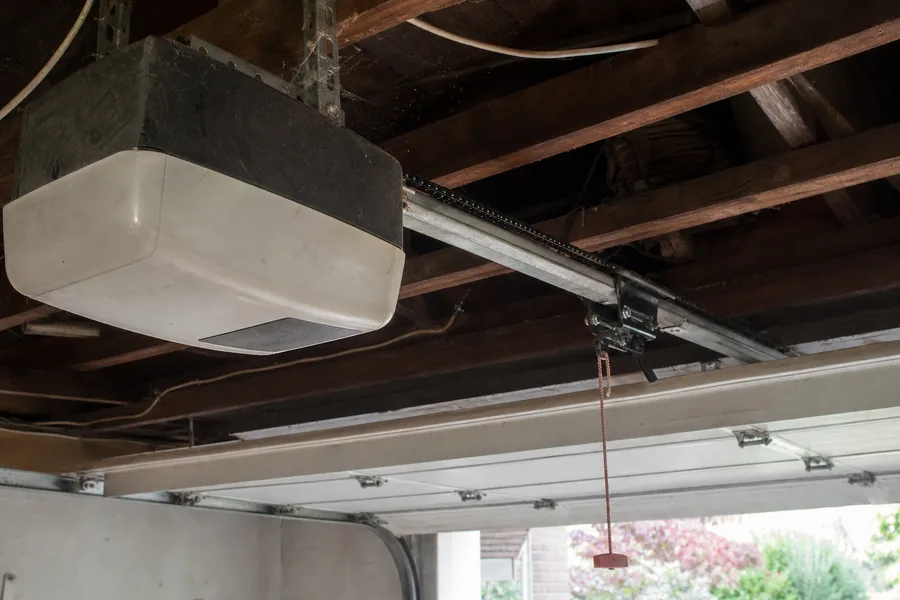
In the older neighborhoods some garages are detached carriage houses behind the house, with heavy wood doors that were never meant for a modern opener. Many hang from long extension springs beside the tracks, and some of those were swapped one at a time over the decades until nothing matches. When one breaks, the answer is two new springs matched to that door's weight, with a safety cable through each so the next break can't fly.
The ranches in the older grid mostly have a single attached door on one torsion spring. Those are straightforward: measure, match, set the tension to the door, test. The newer west-side homes with two-car doors take two springs, and both are replaced together.

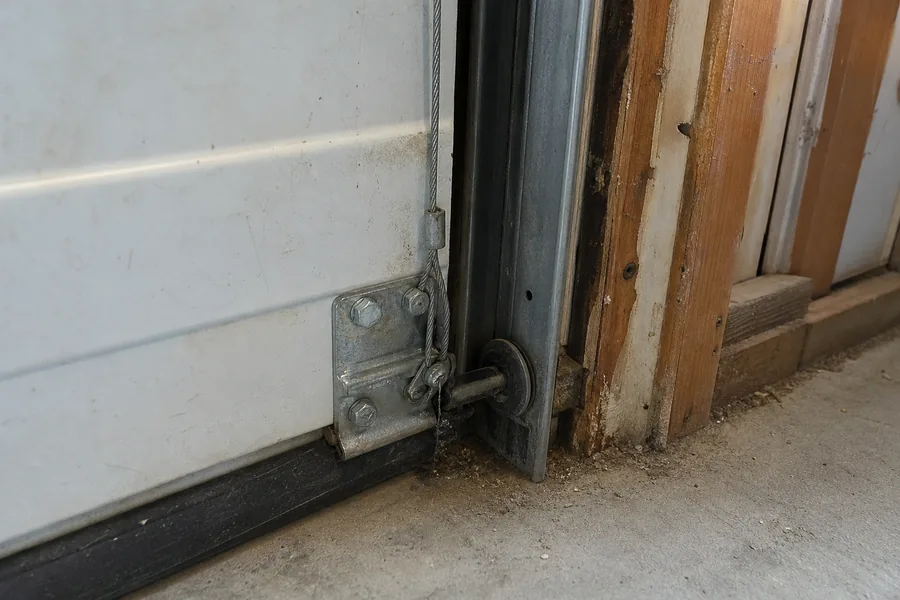
Wind-blown grit works into the tracks and the roller bearings, and a roller that has stopped turning slides instead of rolling. That drag is extra weight the springs and opener carry on every cycle. Summer heat in a closed garage dries out the lubricant, and the end bearings on the spring bar start to grind. Neither one snaps a spring on its own, yet each takes years off it.
So a spring visit covers the rollers, the track, the end bearings and the cables too. Worn parts get their own lines on the estimate, and a door that has dragged for years often runs quieter afterward than it has in a long time.
No surprises; the same order every time.
People look up a garage door tune-up when the door is loud or slow but still working, and that's the right instinct. A tune-up is a visit where the springs are checked for balance and wear, the rollers and hinges get the right lubricant, loose hardware is tightened, the cables are inspected at the bottom brackets, and the opener's force and travel are reset to the door as it runs today.
If the springs turn out to be near the end, you hear it then, with time to plan. If they're fine, the door simply runs better. Either way, anything beyond the tune-up is written up before it's done.
When the visit is done, the door should lift smoothly with one hand once it's off the opener, stay wherever it's let go, and come down without slamming. The opener should start without straining, and when the door meets an object on the way down it should reverse. A door that had been dragging for a while usually runs quieter afterward and puts less wear on the opener.
The estimate also records what was replaced, so you know which parts are new and which are original the next time anyone works on the door.
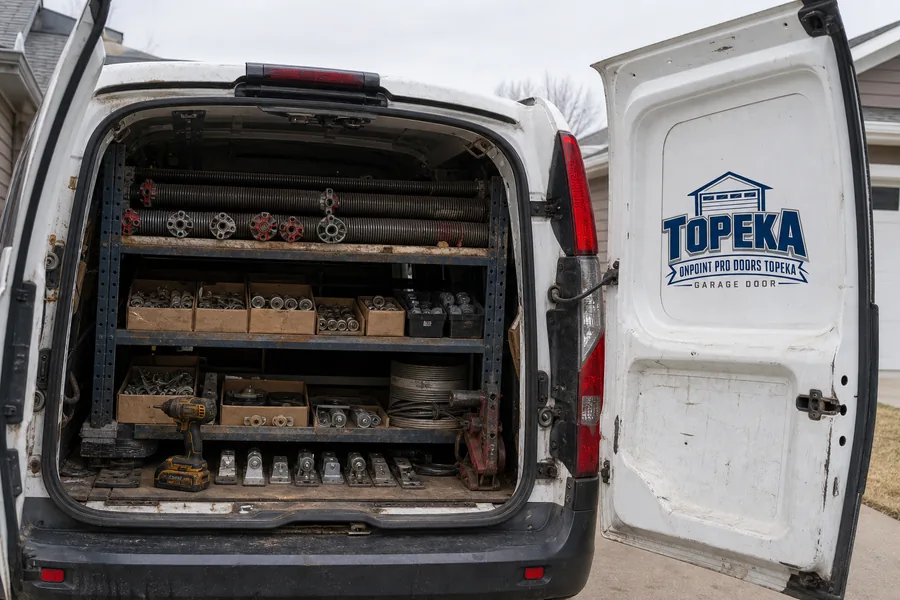
Potwin, Westboro, Oakland, Highland Park, College Hill and Sherwood, and out to Lawrence, Silver Lake, Auburn, Rossville, Carbondale and Tecumseh. The common spring sizes, cables and rollers ride along.
Tell us where you are for a real time slot.
Springs are matched to the door. Not copied from an old label.
Pairs stay pairs. Both torsion springs, or both extension springs, together.
Safety cables on extension springs. Every time.
Written estimate first. You decide what gets done.
The door creeps down when left at halfway, one side lifts ahead of the other, the opener strains at the start, or the coils show a gap. Any of those is worth a visit.
Yes, as a matched set, each with its own safety cable, and the balance is checked by hand before we go.
Usually. It catches worn springs and dry rollers early and resets the opener to the door. It's also one of the shortest visits we make.
Most days, yes. The common sizes are on the truck; unusual doors sometimes need a part ordered, and you're told when.
Yes. The towns nearby are covered the same as the city.
Yes, and nothing is done until you've read it and said yes.
A short call or the form is enough: what the door is doing and where it is. You're given a two-hour slot, and the technician phones on leaving the job before yours.
Free estimate across the county and the small towns nearby.
Tell us the fault and you'll get a straight answer on whether it can wait. Free estimate anywhere in Shawnee County.
Quicker to talk? Call (785) 498-8618.
Tell us what the door is doing. The estimate is free; the work waits for your yes.