Choosing a replacement opener usually happens under pressure, the morning the old one fails. This page sets out the differences calmly: how each type behaves, which homes suit which, and why the door is assessed before any opener is recommended.
Tell us what the door is doing. The estimate is free; the work waits for your yes.
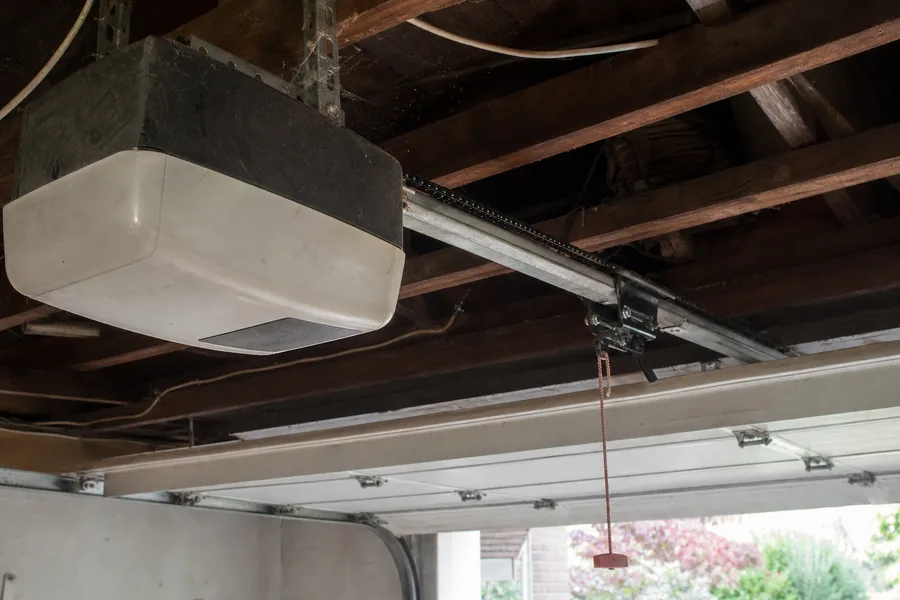
Whatever the brand, an opener draws a carriage along a rail and the carriage draws the door. Designs differ only in what connects the motor to that carriage: steel chain, a steel-reinforced belt, or on some models a long threaded screw. Wall-mounted openers do away with the rail and turn the torsion shaft directly.
Screw drives enjoyed a period of popularity and still appear in some local garages, though they slow noticeably in cold weather and have largely fallen from favor.
In the historic neighborhoods, many detached garages still run chain drives, and some carry heavy carriage-house doors on mismatched extension springs that no opener can manage gracefully. Newer attached garages, particularly those with rooms above, have largely moved to belt drives.
Dust is a local consideration. Prairie wind carries grit into every garage, and a chain gathers it along with its oil, while a belt runs clean.

Where the garage adjoins bedrooms or living space, choose a belt. For a detached garage at the rear of the property, a chain drive remains perfectly serviceable.
A wall-mounted opener suits garages with a vehicle lift, extensive ceiling storage or an unusually tall door, provided the door has torsion springs above the opening.
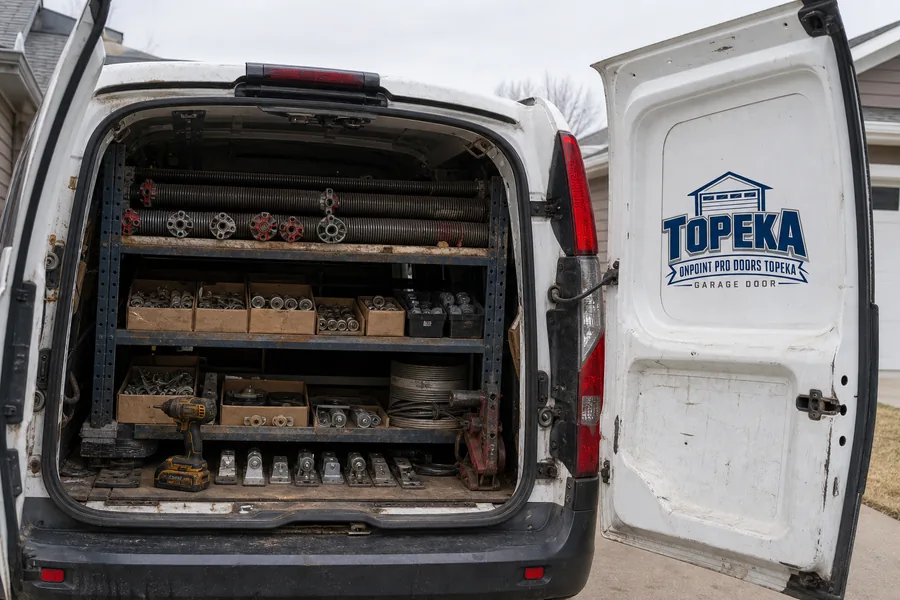
Each visit follows the same order, whichever opener is chosen.
Most current LiftMaster, Chamberlain and Genie models include Wi-Fi, allowing the door's status to be viewed and changed from a phone, with alerts whenever it moves.
Summer heat in an attached garage is hard on any opener's circuitry, which is one reason the newer boards, with better protection, tend to outlast the older ones.
Battery backup is the option we recommend most strongly. Ice storms and summer thunderstorms interrupt power precisely when access matters, and a backup maintains operation for a good number of cycles.
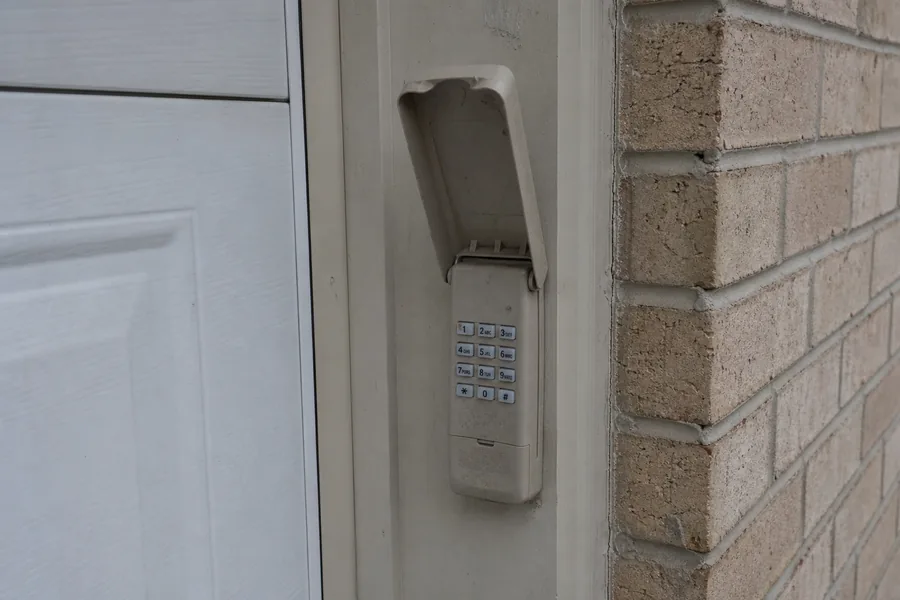
Other options include an outdoor keypad, an illuminated wall control and an automatic close timer. None is required, and each appears as its own line on the estimate for you to consider.
Genie's Signature Series belt models are quiet and often requested by name. LiftMaster's belt units bring Wi-Fi and optional cameras, and Chamberlain offers more basic models built by the same company. We install all three.
Horsepower ratings are only a rough indication. A balanced single door will run for many years on a modest motor, while heavy insulated doubles and tall doors are better served by more power. Balance matters more than the number, and the technician will say plainly what your door requires.
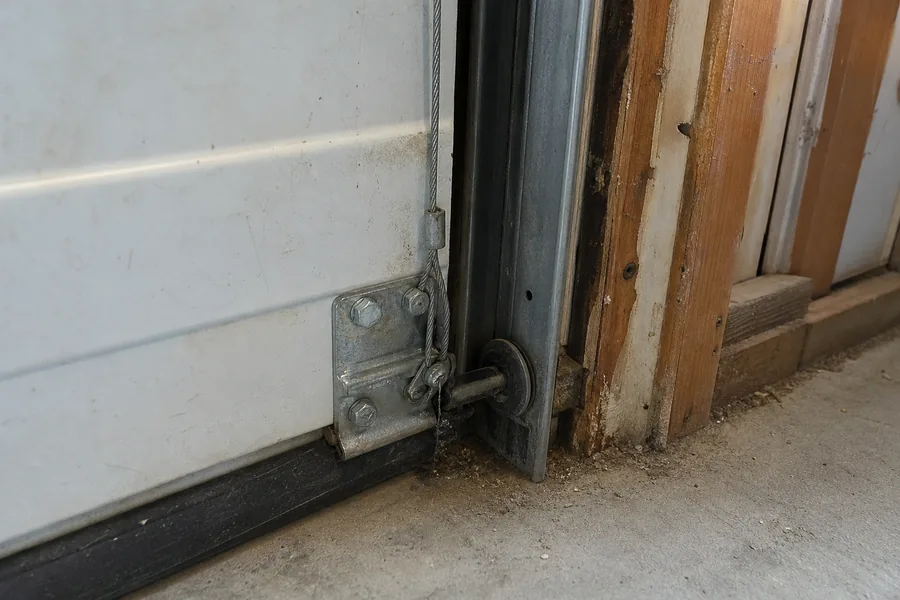
An opener merely transmits effort. When it grinds, stalls or reverses, the underlying cause is often a spring that has weakened, a lift cable beginning to fray, or rollers dragging in their track. Once those are corrected, the existing opener may serve for years.
Installing a new opener without assessing the door simply transfers the problem, and the new unit wears prematurely. For that reason, springs, cables and rollers are always examined first.
The warning signs are worth knowing: an opener that labors more each month, a door that shudders on the way up, a motor that runs warm. Each is an invitation to look at the door before anything fails outright.
The estimate is free. You are told what the door requires and what a new opener would involve before any decision is made. Springs or cables that need attention appear as separate lines.
Belts cannot lift heavy doors. Current belts are steel-reinforced and carry ratings for double and insulated doors.
A larger motor resolves a struggling opener. A struggling opener indicates an unbalanced door. A larger motor merely strains for longer.
Connected openers require a subscription. The standard apps are free; paid tiers add only extras such as stored video.
Screw drives are the most durable. They had a period of popularity, but they perform poorly in cold garages and are seldom the best choice now.
Yes, and most noticeably in rooms above or beside the garage, where a chain drive is audible with every cycle. On townhomes with a shared wall, neighbors tend to notice the difference as well. Many owners say the change is the first thing they notice.
Nearly always, provided the door is balanced and travels freely. Springs and hardware are assessed first. Most doors qualify after a spring or roller repair.
Typically an afternoon, including pairing every remote and vehicle and verifying the safety reverse. The old opener leaves with the technician, and the work area is left tidy.
Possibly, if the ceiling offers no room for a rail. The door must also have torsion springs mounted above the opening. The technician confirms this at the door.
Yes. You are told what the door requires and which opener suits it before any decision is made, and each option is listed on its own.
On most days, and an opener that has failed with a vehicle inside is treated as urgent. As a first step, the door can be disengaged and raised by hand.
Call and describe the door and the current opener. We will agree on a time that suits you, with a courtesy call once the technician is on the way.
Free estimate. Throughout Shawnee County, including Potwin, Westboro, Oakland, Lawrence, Silver Lake, Auburn, Rossville, Carbondale, Tecumseh.
Leave a name, a number and a sentence about the door and the present opener; that is sufficient. Both the visit and the estimate are free.
Quicker to talk? Call (785) 498-8618.
Tell us what the door is doing. The estimate is free; the work waits for your yes.